
Bird Flu is Once Again Putting Australian Poultry Producers on Alert
Australia’s poultry industry has always relied on strong biosecurity practices, but recent developments surrounding Highly Pathogenic Avian Influenza (HPAI), commonly known as bird flu, have reinforced just how important those measures have become.
In recent weeks, Australia has confirmed detections of the H5N1 strain of avian influenza in wild seabirds for the first time. While authorities have emphasised that there is currently no evidence of infection within Australia’s commercial poultry industry, the arrival of the virus in wild bird populations has increased the focus on preventative biosecurity measures across the country.
For poultry producers, prevention is everything.
An outbreak within a commercial operation can have devastating consequences, including livestock losses, movement restrictions, production downtime, increased compliance requirements and significant financial impacts.
Government agencies continue to encourage producers to strengthen on-farm biosecurity, minimise unnecessary movement between sites, and maintain strict control over people, vehicles and equipment entering poultry facilities.
Recommended Reading
If you’d like to stay informed about the current situation, these resources provide reliable and regularly updated information:
- Australian Government Bird Flu Updates
- CDC Australia – Bird Flu (Avian Influenza)
- Wildlife Health Australia – H5 Bird Flu Information
- Reuters: Australia Confirms First H5N1 Case in Local Seabird
- ABC News: What We Know About H5N1 in Australia
Biosecurity Doesn’t Stop at the Farm Gate
When people think about biosecurity, they often picture disinfectant stations, vehicle wash-down areas and controlled entry points.
Those measures are all essential.
However, one of the biggest biosecurity risks can be much harder to manage:
People moving between poultry sheds and production sites.
Large poultry operations frequently have employees, contractors, veterinarians, maintenance personnel and management staff travelling between multiple farms every day.
Without accurate records, it can become difficult to answer questions such as:
- Which farms has this worker visited today?
- Has anyone entered a higher-risk quarantine area before attending another site?
- Are staff following the required movement protocols?
- Can we quickly identify everyone who has visited a particular location if an incident occurs?
These are exactly the kinds of questions that become critical during a biosecurity event.
A Practical Solution: EMP Track
At Deltonic t/a UniGuard, we’ve worked with a large commercial chicken farming operation in Queensland to implement EMP Track, our workforce tracking solution designed to improve operational visibility while supporting biosecurity procedures.
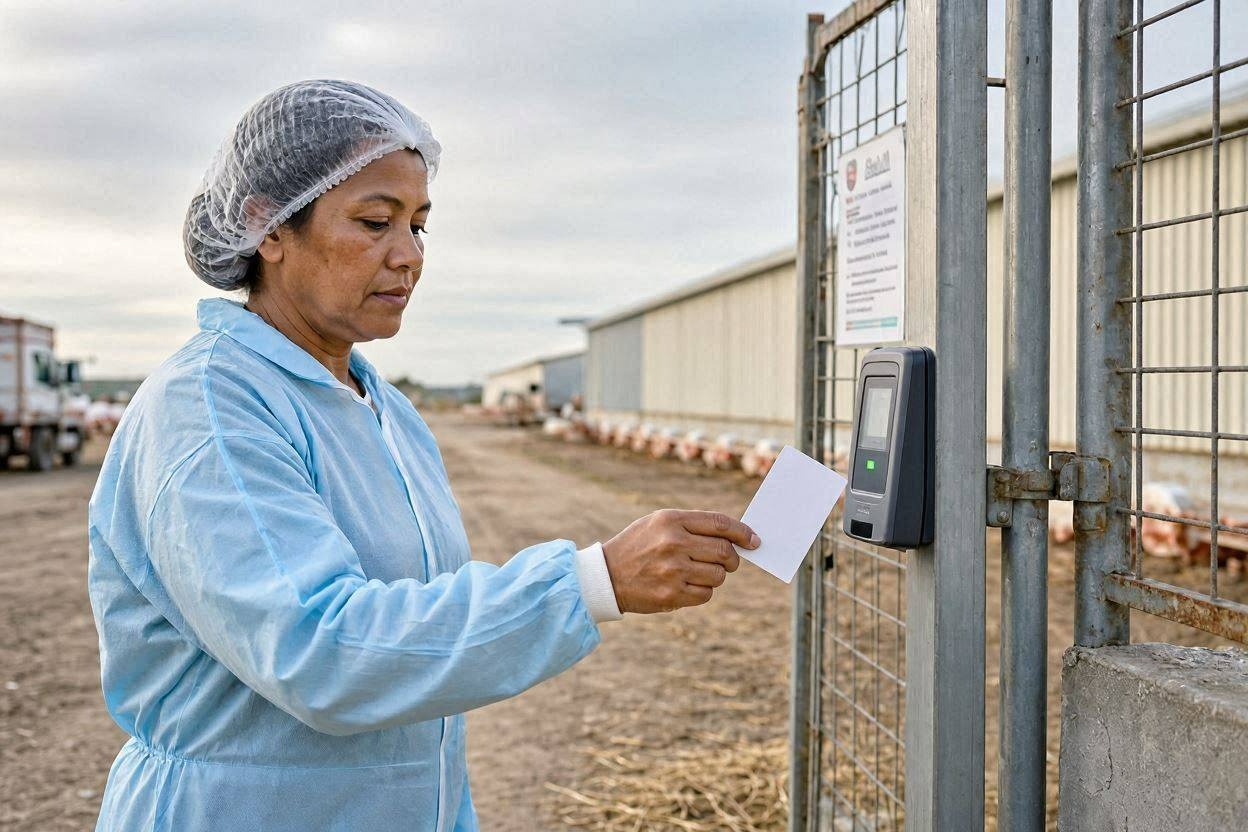
EMP Track records when authorised workers enter and leave different poultry sites, creating an accurate history of workforce movements across the operation.
Importantly, the system allows management to identify movements between locations with different quarantine classifications.
This helps reduce the risk of workers inadvertently moving from a higher biosecurity risk area into a lower-risk production site without following the appropriate procedures.
Rather than relying on manual sign-in sheets or paper records, farm managers have immediate access to a digital audit trail showing where personnel have been and when.
The result is improved compliance, greater operational oversight and stronger support for existing biosecurity protocols.
Supporting Better Biosecurity Decisions
Technology cannot replace good farm biosecurity practices, but it can make them easier to manage consistently.
Digital workforce tracking provides benefits including:
- Accurate worker movement records
- Improved compliance with site access protocols
- Faster tracing of personnel movements during investigations
- Reduced reliance on paper sign-in processes
- Increased confidence during internal and external audits
- Better visibility across multi-site poultry operations
As the poultry industry continues to strengthen its preparedness against avian influenza and other diseases, having reliable information about workforce movement is becoming an increasingly valuable part of a comprehensive biosecurity strategy.
Looking Ahead
Australia’s poultry industry has an outstanding reputation for biosecurity, and protecting that reputation requires continual investment in both people and technology.
Whether responding to emerging disease risks such as H5N1 bird flu or simply improving day-to-day operational efficiency, digital workforce management can play an important supporting role.
EMP Track demonstrates how practical technology can complement existing farm biosecurity measures by helping poultry businesses understand exactly who has been on site, where they have travelled, and whether quarantine protocols have been followed.
For organisations operating multiple poultry farms, hatcheries or production facilities, that visibility can become an important part of maintaining strong biosecurity standards.
Want to Learn More?
If you’re looking to strengthen workforce management and biosecurity across your poultry operations, we’d be happy to demonstrate how EMP Track can help monitor site access, improve compliance and support your existing biosecurity procedures.